Top Nutrients Required in Cattle Feed for Healthy Dairy Cows
Healthy dairy cows are the backbone of any profitable dairy farm, and the key to their productivity is through supplying the right cattle feed nutrients. Good nutrition will not only help increase milk yield but also will enhance fertility, immunity, digestion, and the general well-being of animals. Regardless if you’re running a small dairy farm or a large commercial one, knowing what essential nutrients dairy cows need is key to long-term success.
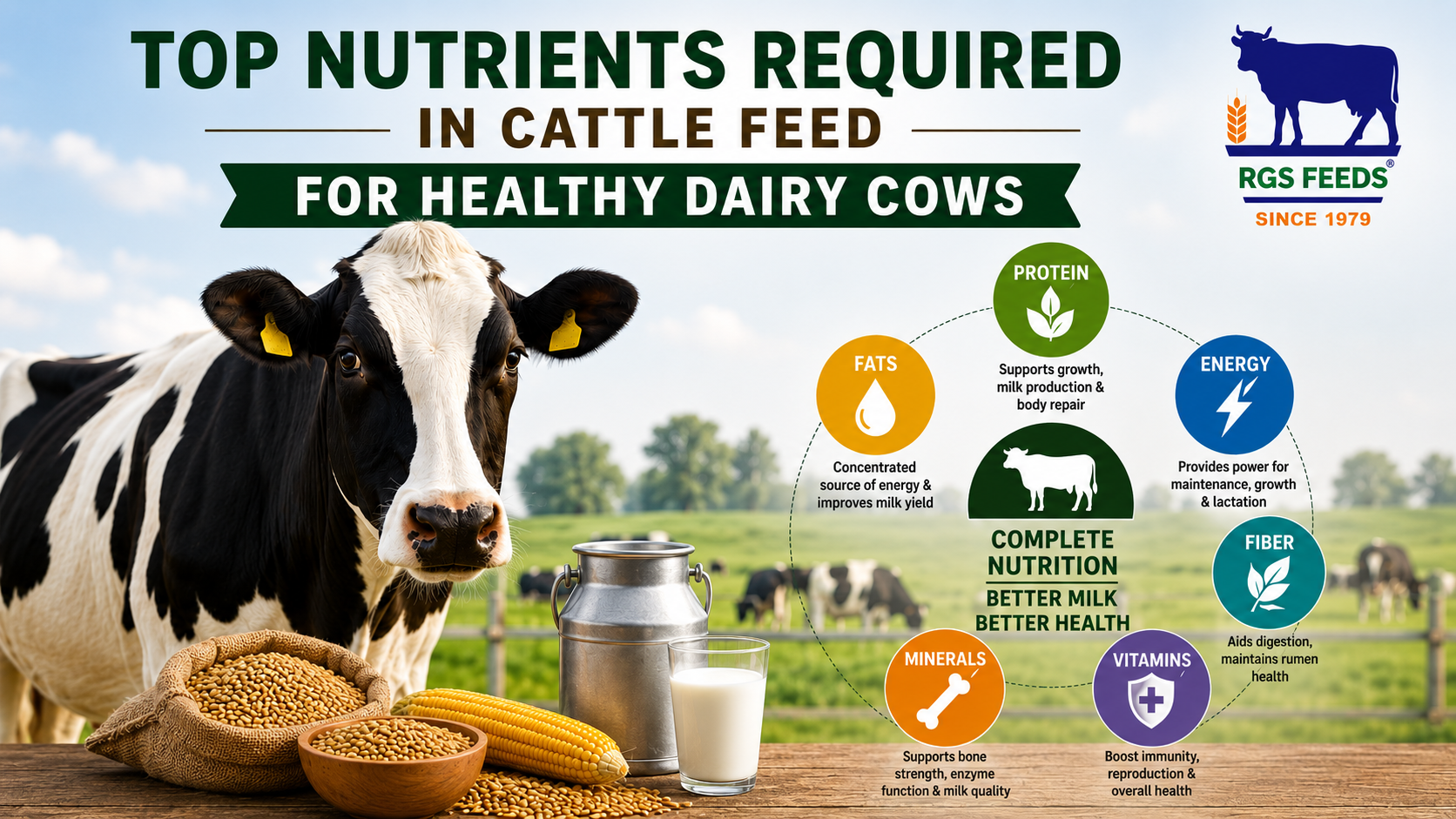
There are six major types of nutrients that a good dairy cattle feed should include: protein, energy, fiber, minerals, vitamins, and water. These nutrients collectively enable the dairy cattle to satisfy their nutritional needs, enhance the feed conversion ratio, and maintain the productivity of the dairy farm in the long run.
Why Are Cattle Feed Nutrients Important for Dairy Cows?

The nutritional needs of dairy cows vary with their age, body weight, level of milk production, and stage of reproduction. Meeting their needs with the right mixture of nutrients will help increase milk output, improve feed efficiency, and keep them healthy overall.
Proper dairy cow nutrition can deliver several benefits:
- Higher milk production and milk quality
- Enhanced all-reproductive performance
- Improved immune system
- Enhanced digestion and rumen health.
- Increased profitability of dairy farms
- Minimized chances of nutritional diseases
Quality animal feed nutrition is definitely one of the most powerful tools farmers can use to raise the productivity of their livestock and ensure dependable outcomes.
Top Nutrients Required in Cattle Feed for Dairy Cows
1. Protein The Base of Milk Production
Protein is a very essential cattle feed nutrient among the others, as it supports muscle growth, repair of tissues, protein formation in milk, and reproductive health.
Dairy cows need sufficient protein in their diet to keep their body condition and produce large quantities of milk. High-protein cattle feeds are typically:
- Soybean meal
- Groundnut cake
- Cottonseed cake
- Mustard cake
- Legume fodder
Protein deficiency can cause lower milk output, slow growth, and a decreased immune system. It helps to add high-quality protein sources when mixing your cattle’s diet to ensure the health of dairy cows.
2. Energy Fuel for Maximum Milk Yield
An energy-rich feed delivers the energy that a dairy cow needs for its regular day-to-day routine, for growth, for reproduction, and for milk production. Energy requirements of a lactating cow are mostly high.
The following are common sources of energy:
- Maize
- Barley
- Sorghum
- Corn silage
- Molasses
Energy deficiency leads to weight loss, decreased breeding capacity, low milk production, and poor performances in general. A balanced energy diet will contribute to higher feed efficiency and productivity on dairy farms.
3. Fiber—Building Blocks for Healthy Rumen
Fiber is an important element present in good-quality feeds meant for cows since it helps in the digestion process and maintains the rumen’s good health.
Some of the common sources of fiber include:
- Green Feeds
- Hay
- Silage
- Rice Straw
It is important to include enough fiber in the feeds because it helps in the fermentation process of the rumens, which allows nutrients to be absorbed efficiently and prevents acidosis.
4. Minerals—Helping the Bones, Fertility, and Immunity
The role that minerals play in the treatment of cow diseases can never be underestimated. Some of the essential minerals that are required by dairy cows include:
- Calcium
- Phosphorus
- Magnesium
- Zinc
- Selenium
These minerals help to enhance bone health, fertility, and immunity. It is vital that you provide your dairy cows with a mineral mixture.
5. Vitamins—Strengthening Immunity and Productivity
The vitamins are essential in growth, disease resistance, and reproduction. The essential vitamins that dairy cattle require are:
- Vitamin A
- Vitamin D
- Vitamin E
The use of vitamins helps to enhance good eyesight, improve immune strength, increase reproductive capacity, and promote the overall growth of the animal. The absence of vitamins leads to poor performance and high risks of infections.
6. Water – The Most Overlooked Nutrient
Water is frequently disregarded but actually an essential component required by dairy cows. Given that milk consists of a lot of water content, there should be constant provision of clean water to the cow.
Water aids in:
- Increased milk output
- Better digestion
- Nutrient absorption
- Good general well-being
Failure to meet the cow’s water requirements would mean that even the highest quality ingredients used for feeding will not achieve optimal results.
Signs Your Dairy Cows May Be Lacking Essential Nutrients
Early detection of such problems may reduce losses caused during production. Symptoms of nutritional deficiency include
- Low milk yield
- Weight loss
- Low fertility
- Poor immune system
- Poor hair coat
- Problems with digestion
- Low growth rates
- High disease incidence
These symptoms indicate that there is a need to reassess the feeding program of the cattle.
How to Create a Balanced Cattle Feed for Maximum Milk Yield

Balanced cattle feeding calls for a combination of proteins, energy, fibers, minerals, vitamins, and water in correct proportions. Successful cattle feed formulation is about mixing good-quality roughage with nutrient-rich concentrates and necessary supplements.
- To get good results, you should:
- Use first-class ingredients for cattle feed.
- Add enough mineral mixtures and vitamin supplements.
- Keep proper forage-to-concentrate ratios.
- Regularly check feed efficiency.
- Have clean water available all the time.
RGS Feeds recognizes the significance of nutrition scientifically designed for dairy animals. Our top-notch feed products aim at maintaining healthy dairy cows, increasing milk yield, optimizing feed conversion ratio, and sustaining herd health eventually through well-balanced nutrition.
Frequently Asked Questions
1. What nutrients do dairy cows need daily?
Everyday dairy cows need protein, energy, fiber, minerals, and vitamins, as well as water, for their performance and good health.
2. Which nutrient is most important for milk production?
The two most critical nutrients affecting milk production and composition directly are protein and energy.
3. What protein sources are best for dairy cattle?
Among the top protein sources are soybean meal, groundnut cake, cottonseed cake, mustard cake, and leguminous forage/green fodder.
4. What is the role of fiber in dairy cow feed?
The role of fiber is to maintain rumen health, improve digestion, and reduce the chances of metabolic diseases.
5. How do minerals enhance the health of dairy cows?
Minerals make bones stronger, increase fertility, help the body fight diseases, and improve milk productivity.
6. How much water does a dairy cow require per day?
Water requirements may vary, but for highly productive dairy cows, they can consume a substantial amount of water each day.
7. What happens if dairy cows do not receive balanced nutrition?
Any nutritional deficiencies can compromise milk yield, fertility, and immunity and, because of this, the profitability of the farm.
8. How can farmers improve dairy cow nutrition naturally?
Quality forage, well-balanced concentrates, mineral mixtures, vitamin supplies, and clean water should be fed by farmers for better nutrition.
Conclusion
Feeding dairy cattle with the right nutrients is critical for their health and optimum milk production. Giving them a well-balanced ration with protein, energy, fiber, minerals, vitamins, and water is essential, as it will promote immunity, reproduction, rumen function, and the whole farm’s productivity.
Proper cattle nutrition management coupled with the decision to use scientifically formulated feed solutions can be a way to help farmers grow sustainably and realize long-term profitability.
Choose RGS Feeds for balanced cattle nutrition that supports healthier cows and higher milk production.