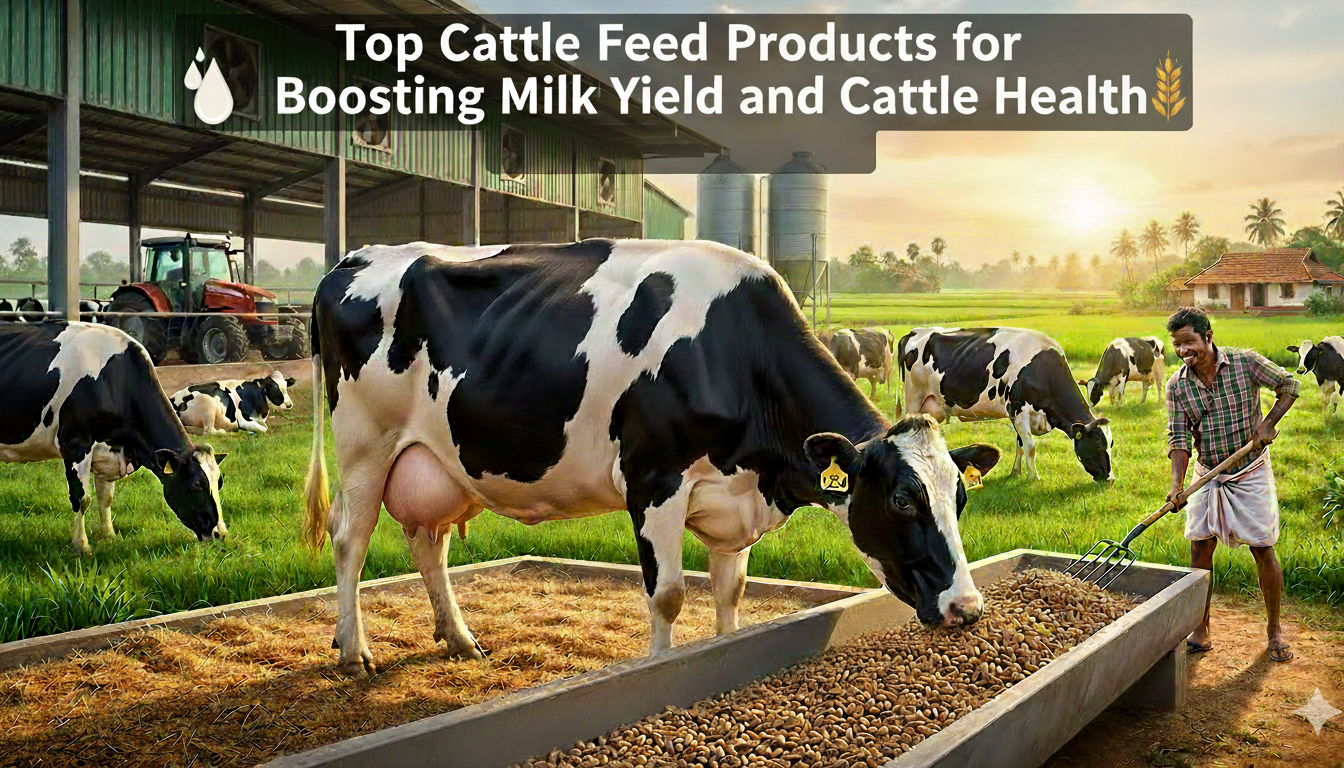
Top Cattle Feed Products for Boosting Milk Yield and Cattle Health
Introduction
Milk production and cattle health serve as the primary criteria for determining dairy farm efficiency and profitability. One of the major factors linked to increased milk output is cattle feed quality. Animal nutrition plays a significant role in supporting the overall well-being and performance of dairy cows by providing them with the optimal ratio of protein, energy, fiber, minerals, and vitamins.
A well-balanced diet will do a lot more than just increase milk production. It will also stimulate digestion, strengthen the immune system, and help reproduction. Those farmers who invest in the best cattle feed for milk production generally have healthier animals, produce high-quality milk, and enjoy good productivity over the long run.
This guide will describe the most effective cattle feed products for increasing milk production and enhancing cattle health, highlight the key nutrients that dairy cows should get, and discuss the feeding techniques through which farmers can get the maximum milk yield out of their cows. Firms like RGS EFFDS are dedicated to delivering top-notch cattle nutrition products that help farmers work with dairy animals more effectively.
Why Proper Cattle Feed is Important for Milk Production
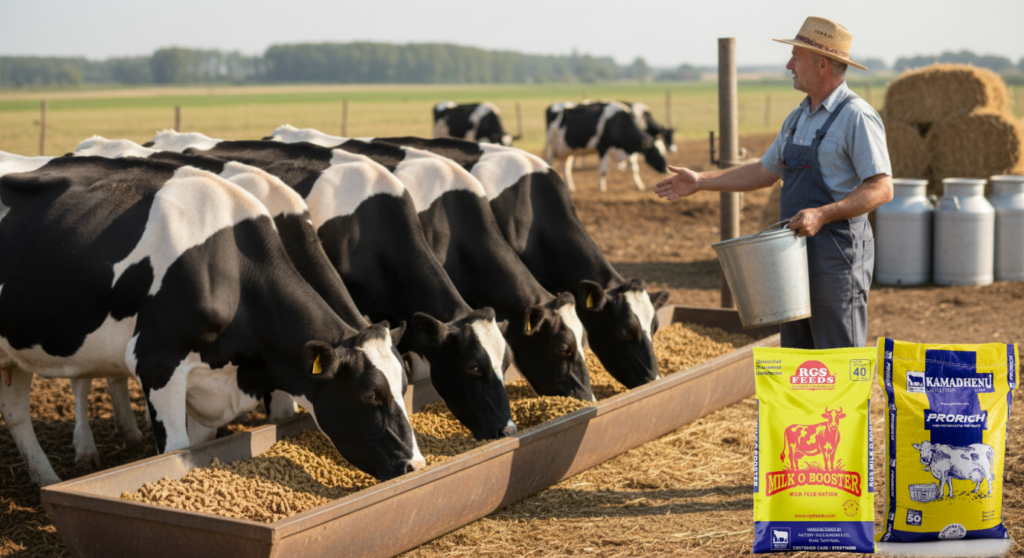
Nutrition directly influences not just the quantity but also the quality of milk that dairy cattle are capable of yielding. When dairy cattle are offered a ration that aligns with their requirements, their organisms will function optimally; thus, the animals will be able to transform the feed into milk in a more effective way.
Key benefits of proper cattle feeding include:
- Higher milk production in dairy cows
- Better digestion and nutrient absorption
- Improved reproductive health
- Stronger immune system
- Better body condition and energy levels
Providing balanced cattle feed for milk production ensures cows get the nutrients they need during different stages of lactation and growth.
Essential Nutrients Required in Dairy Cattle Feed
To achieve consistent milk yield, dairy cattle require several essential nutrients in their daily diet.
1. Protein
Protein plays a very important role in milk production, muscle growth, and even in the repair of body tissues. Giving cattle protein-packed feed components will help uplift their milk production level and their growth in general.
Below are some examples of good protein sources:
MOST COMMON PROTEIN-RICH FEED INGREDIENTS FOR CATTLE, especially for dairy cows, are these.
2. Energy Sources
Energy fuels dairy cows bodily functions, this being the case especially during milk production. Should the animals not receive adequate energy, their milk output might drop.
The following are the most energy-dense feed sources: These grains provide the energy required by cows to support continual milk production and maintain a healthy body condition.
3. Fiber
Fiber is crucial to keep the rumen healthy and support the digestion process. It encourages cows to chew effectively and increases the use of feed by the animals.
Usual fibrous feed materials are the following:
A sufficient fiber supply guarantees the digestive tract functions efficiently and stops the appearance of digestive problems.
4. Minerals and Vitamins
Minerals and vitamins play a very significant role in bone strength and help metabolic functions and immune health of dairy cattle on the whole. Major minerals that you should take into account are: Besides improving metabolism, vitamin supplements also help to elevate overall health, thus resulting in increased milk production.
Top Cattle Feed Products for Dairy Cows
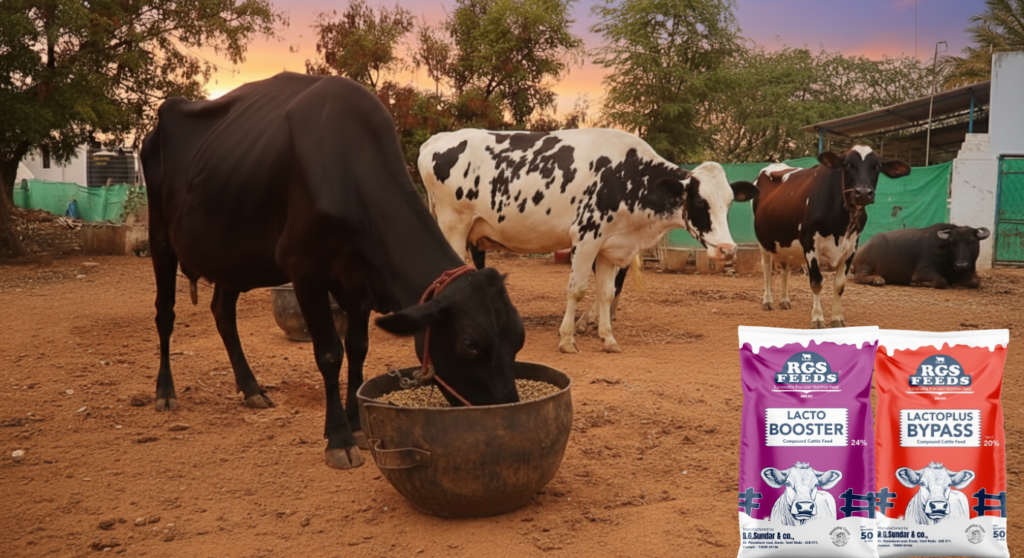
Selecting the appropriate cattle feed products is crucial for ensuring milk production and animal health.
1. Compound Cattle Feed
Compound cattle feed is a combination of grains, protein sources, minerals, and vitamins. It is very popular with dairy farmers, as it provides complete nutrition with a single feed formula. Many modern dairy farms rely on quality feed products from companies like RGS EFFDS for consistent milk production.
2. Protein Supplements
Protein supplements play a role in boosting milk production and also help in the building of muscles. This type of feed is most often given to cattle that need an extra amount of protein to increase their milk yield.
3. Mineral Mixtures
Mineral mixtures do more than just help in preventing nutrient deficiencies. They are instrumental in improving reproduction performance, boosting immunity, and enhancing milk quality. When mineral supplements are given to cattle, the total output of the dairy farm can be significantly boosted.
4. Green Fodder
Greens like Napier grass, maize fodder, and lucerne are natural sources of nutrients and fiber that can aid digestion and maintain the health of cattle’s rumen. They are absolutely necessary for any well-balanced feeding program of dairy cattle.
5. Silage
Silage is a sort of preserved animal feed as a result of lactic fermentation and can be stored for a considerably long period. It can continually deliver nutrients and energy to milk cows, especially during the periods of raw feed scarcity.
6. Oilseed Cakes
Oilseed cakes such as cottonseed cake and groundnut cake have very high proteins and energies; they are generally used to raise milk production and cattle body conditions.
Best Feeding Practices to Increase Milk Yield
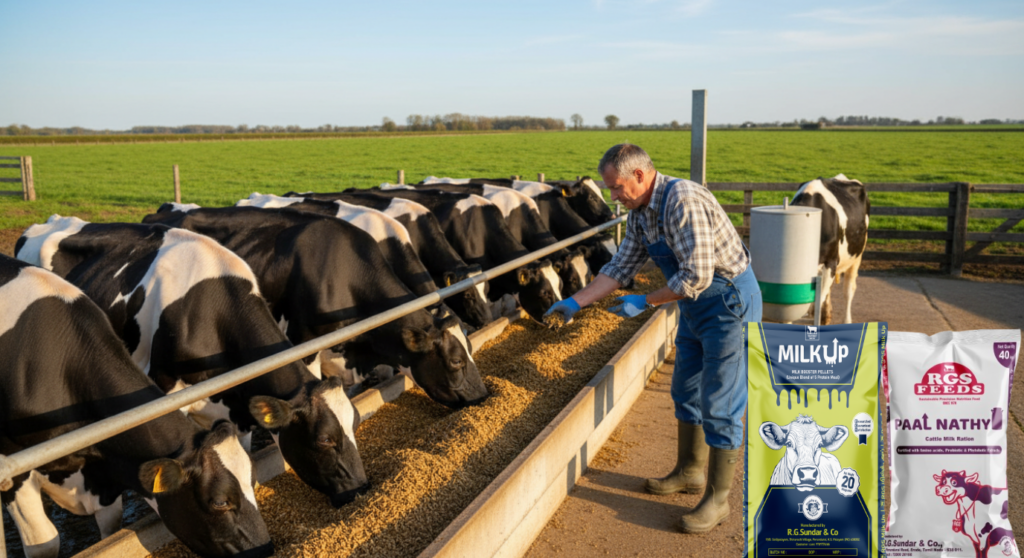
Choosing the best cattle feeding products is just the starting point. Besides that, farmers must adhere to the correct cattle feeding methods in order to get the best results. The key methods of cattle feeding are the following:
- Providing balanced rations with proper nutrient levels
- Feeding cattle at the same time every day
- Ensuring constant access to clean drinking water
- Including mineral mixtures regularly
- Maintaining hygienic feeding areas
All these methods will not only increase the production efficiency of the cattle feed but also help in keeping the dairy cows in good health.
Common Feeding Mistakes Farmers Should Avoid
Many farmers are actually their own enemy in terms of milk production due to the wrong feeding method. The most common errors are:
Defending against these blunders is a way to make sure that cows get quality nutrition that will lead to maximum milk production.
Conclusion
Increasing milk production and enhancing animal health mostly rely on access to top-notch and well-balanced cattle feed. A suitable mix of protein, energy, fiber, minerals, and vitamins is what drives great performance by dairy cows and continued growth of livestock.
Choosing proper cattle feed items and implementing scientifically backed feeding regimes are two ways in which livestock owners can significantly increase milk production and at the same time keep the cattle healthy. Reliable feed alternatives from RGS EFFDS and other reputable companies allow dairy producers to give their animals regular, nutritionally sound, and balanced rations.
Enhance milk production and cattle health with top-quality feed from RGS EFFDS.
FAQ
1. What is the best cattle feed to increase milk yield?
The best cattle feed to raise milk production should be a balanced combination of protein sources, energy-dense grains, fiber, and mineral supplements that can both maintain the lactation and the health of the cattle.
2. How does cattle nutrition affect milk production?
Proper nutrition allows for the improvement of metabolism, digestion, and energy levels, therefore enabling dairy cattle to regularly produce higher quantities of milk.
3. How often should dairy cows be fed?
Normally, dairy cows should be fed two to three times per day. Besides this, they should have constant access to clean water and green fodder.
4. Why do dairy cows need mineral mixtures?
Mineral mixtures serve to prevent deficiencies of important nutrients, enhance reproduction, boost immunity, and result in better quality milk.
5. Will low-quality feed cause the milk production to drop?
The answer is yes. Giving feed that is of poor quality or polluted can harm the way the animals digest the food, their health, and their milk production.