Cattle Feed Economics: Quality vs. DIY
Feed costs make up almost 60%–70% of the total production expenses in the dairy and livestock sectors. In view of the increasing input prices, farmers are consistently debating the merits of buying good-quality commercial cattle feed versus making homemade feed for cows. A Do It Yourself (DIY) feeding might look cheap from the outside, but the real question is whether it actually provides better returns over time. Knowing the economics of cattle feeding is a must if one is to increase productivity, herd health, and farm profitability in general.
This blog discusses the cost, nutrition, and long-term differences between a good-quality commercial cattle feed and a DIY feeding practice so that farmers can decide wisely which one to opt for.
Why Cattle Feed Quality Directly Impacts Farm Economics
The quality of cow cattle feed is the primary factor that affects milk yield, growth rate, fertility, and immunity. Adequate feed makes sure that nutrients are absorbed efficiently, which leads to lower feed conversion ratios (FCR). Otherwise, low- or unbalanced-quality feed may cause poor digestion, stress, and even increased medical expenses for the cattle.
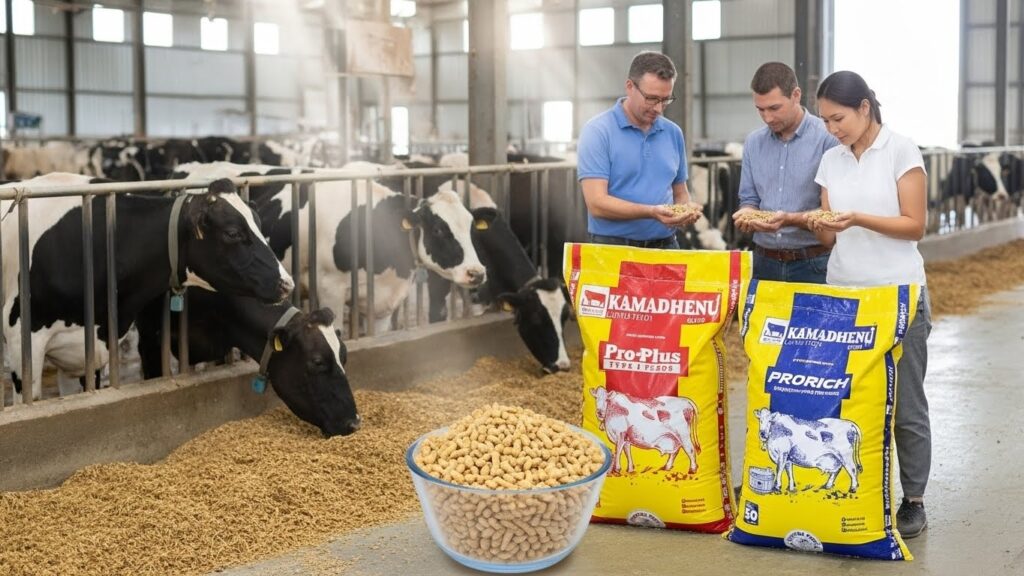
Several farmers only focus on the price per bag of cow food and disregard the indirect costs that entail less milk production, more frequent health issues, and lower reproductive efficiency. While cheaper feed may reduce expenses for a short period, quality cattle feed is always a better investment, as it results in healthier animals and more stable outputs over time.
What Is DIY Cow Feed? Cost Savings or Costly Mistake?
DIY cattle feed is largely made up of homemade grains, crop residues, oil cakes, bran, and mineral supplements. The farmer community generally prefers this method, as it involves less initial investment, and the raw material can be easily sourced from the local area.
Whereas the local feed industry is already struggling to meet the demands of animal nutrition and health, DIY cattle feeding adds to the problem. It calls for specialized knowledge to be able to offer an adequate supply of protein, energy, minerals, and vitamins. Animals may receive an improperly formulated diet, the quality of the ingredients may vary, and contamination may lead to health issues.
Moreover, the time and effort that go into making DIY feed are usually counted as free. Without scientific formulation, DIY cow food might result in nutrient deficiencies that lower milk yield and animal performance silently.
Quality Commercial Cattle Feed: What You’re Really Paying For
Top-tier commercial cattle feed is the result of leading-edge nutritional science and very strict quality control standards. Such feeds offer balanced protein, energy, fiber, minerals, and vitamins specifically adjusted to different production stages.
The farmers, when purchasing premium cow feed, are essentially buying consistency, safety, and efficiency. A scientifically balanced diet will lead to better digestion, enhanced immunity, and stable milk yield. Instead of thinking that commercial feed is costly, one should acknowledge that its higher feed efficiency usually leads to a reduction in total feeding costs per animal.
Reliable manufacturers such as RGS Feeds take every measure to ensure that each batch of feed not only meets the nutritional standards but also helps farmers to achieve dependable and sustainable outcomes.
Cost Comparison: Quality Feed vs. DIY Feed
It might be that a homemade cattle feed looks to be less expensive at first because the raw materials are cheaper. However, when we factor in losses from storage, transportation, and waste, the visible costs escalate rapidly. Along with decreased milk production, slower weight gain, increased veterinary expenses, and higher labor costs are some of the costs that are hidden in the DIY feed.
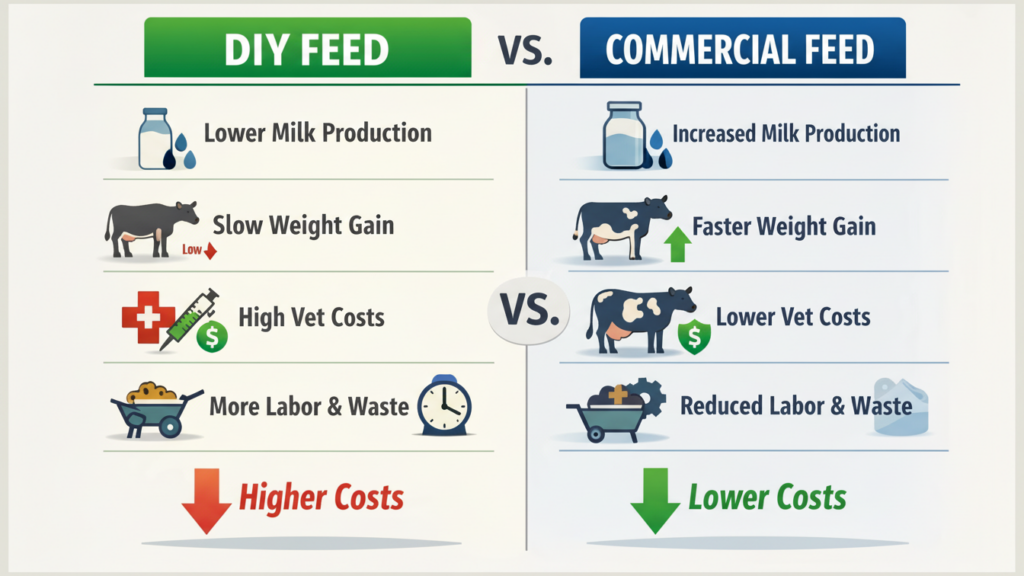
High-quality commercial cow feed, although it might seem expensive at first, actually results in better net returns due to increased productivity and fewer health risks. Many farmers switch to quality feed, after which the cost of a liter of milk or a kilogram of weight gain becomes lower.
Long-Term Impact on Herd Health and Productivity
Consistently and evenly feeding cattle not only results in better reproductive performance but also leads to a longer animal lifespan and makes the calves healthier. High-quality nutrition contributes to the strengthening of the animals’ immune system; thus, the occurrence of diseases decreases, along with the costs of treatments.
A poorly balanced homemade cow food may not adversely affect the herd in a short period of time, but in the long run, it can result in a weakening of the herd genetics, a decrease in fertility, and a reduction of lifetime productivity. The sustainability of the dairy industry is to a significant extent dependent on the predictability of the output, which is most effectively secured by the use of nutritionally complete cow cattle feed.
How to Choose the Right Cattle Feed for Your Farm
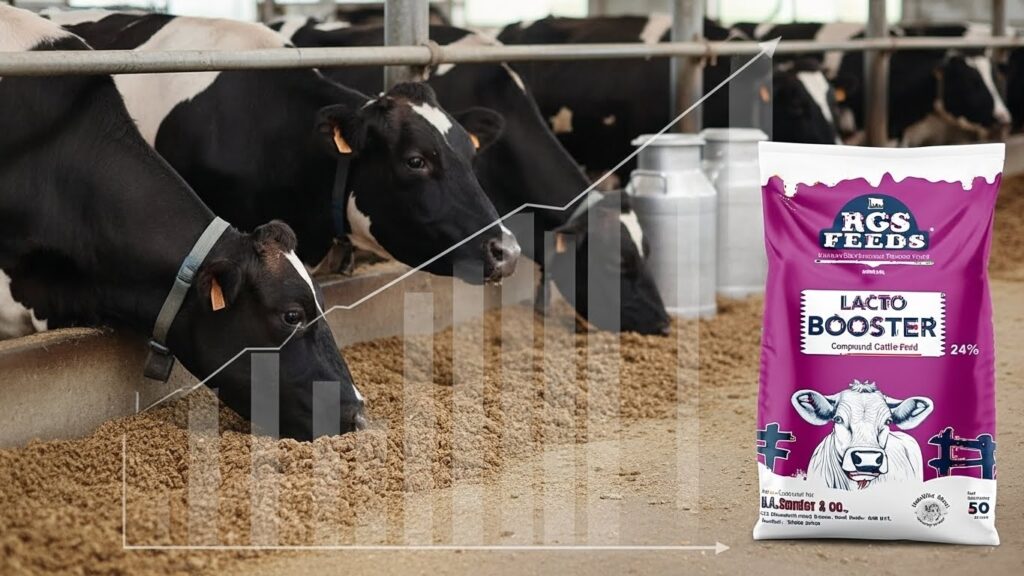
The decision on which cattle feed to use must be influenced by the age of the animals, the production stage, milk goals, and the availability of local fodder. Typically, a hybrid approach, i.e., the use of a quality commercial feed together with green fodder and dry roughage, brings about the best results.
Farmers who want to alter their feeding patterns must initially seek the recommendation of a feed specialist or a nutritionist. RGS Feeds is a brand that accomplishes this by giving expert advice and providing scientifically formulated solutions that are specially tailored for the needs of contemporary farming.
Conclusion:
When looking at cattle feed, the price should not be the main factor that decides the purchase. A DIY cow food recipe can bring down the costs for a while, but a quality commercial cow feed will always deliver more productivity, healthier animals, and higher returns over time. Smart cattle feeding is about investing in nutrition that supports steady growth.
Boost herd health and profits with RGS Feeds
FAQs:
1. Is a DIY cow feed cheaper than a commercial one?
A homemade feed might look cheaper at the start; however, in most cases, the hidden costs will make it less economical over time.
2. Does high-quality cattle feed really increase milk yield?
Absolutely. Balanced nutrition improves the animals’ digestion and nutrient absorption, thus directly increasing milk production.
3. Is it okay if I mix commercial cow feed with homemade fodder?
Indeed, mixing good-quality commercial feed with locally produced fodder is not only smart but also a money-saving way.
4. How can I tell that my cattle feed is nutritionally balanced?
Getting expert advice from nutritionists or using dependable brands like RGS Feeds is a sure way of having a balanced formulation.