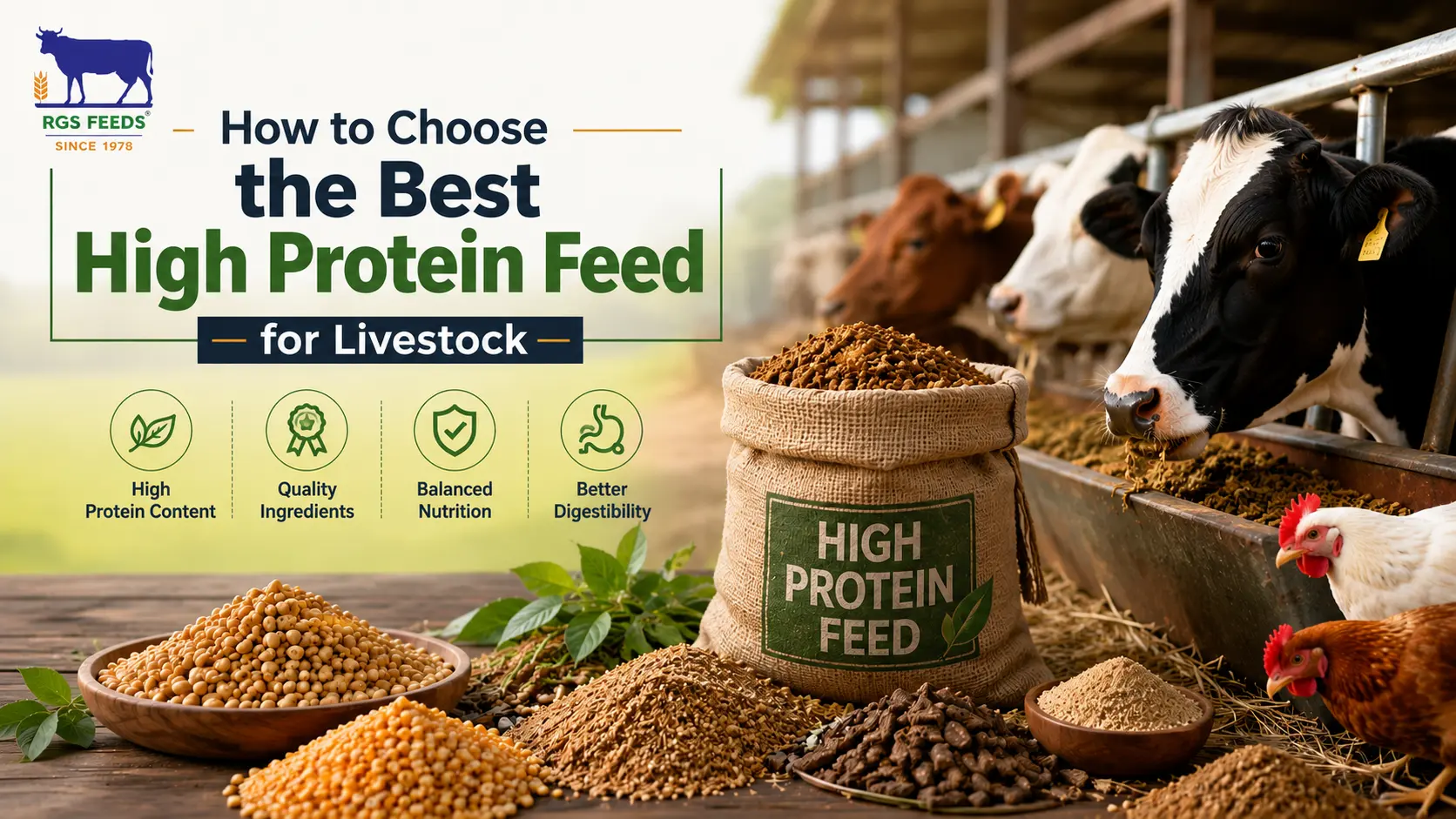
How to Choose the Best High Protein Feed for Livestock
Livestock productivity is very much tied to good nutrition, and protein is among the most important nutrients in all feeding programs. By picking the right high-protein feed for livestock, you can see better growth, more milk, better reproduction, and basically more profitability for your farm.
Whether you manage dairy cattle, goats, sheep, or poultry, choosing a protein-rich animal feedthat fulfills your animals’ dietary needs remains the key to sustainable livestock farming.
Why Protein Matters in Livestock Nutrition
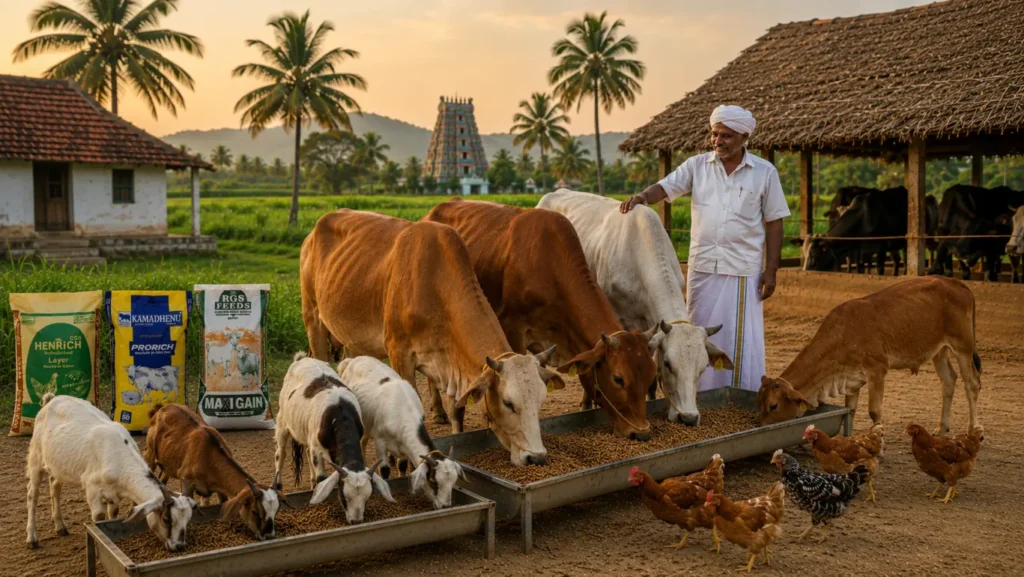
Protein is very important in animal nutrition. It contains the necessary amino acids that are used for the development of muscles, healing of tissues, production of enzymes, and strengthening the immune system. Animals fed with sufficient protein can very well turn their feed into body weight, milk, meat, or eggs.
Benefits of High Protein Feed for Animals
- Supports rapid weight gain and muscle building
- Boosts dairy animals’ milk yield
- Helps to enhance fertility and reproduction
- Improves immunity and resistance to diseases
- Increases the efficiency of feed utilization
- Encourages good growth of the young animals
Well-nourished animals are more likely to be healthy and perform well. So, farmers who invest in good nutrition for their animals can expect to see a higher overall productivity of their herd and better financial returns.
Understanding protein requirements of different livestock
| Livestock Type | Recommended Protein Level |
| Dairy Cattle | 16–18% |
| Growing Calves | 18–20% |
| Goats | 14–18% |
| Sheep | 12–16% |
| Poultry | 18–22% |
Dairy Cattle
Dairy cows need high-quality protein to produce milk and keep their bodies in good condition. The most effective high-protein feed for dairy cattle benefits from having balanced amino acids and protein sources that are highly digestible.
Goat Farming
Protein-based goat food plays a critical role in their development, reproduction, and milk formation. Protein food ensures goats retain their body weight as well as enhances reproduction processes.
Sheep Farming
Protein-based sheep food for development ensures healthy muscle formation and production of quality wool.
Poultry
Protein in poultry food should be higher than that in other animals’ food types.
Key Ingredients Found in Quality High-Protein Feed
Knowledge of feeds will help farmers select the right livestock feeds.
Soybean Meal
This is one of the most popular sources of proteins because of its high digestibility and amino acid balance.
Groundnut Cake
Inexpensive source of proteins mostly used in feeding cattle and goats.
Cottonseed Meal
High in protein and offers extra energy to ruminant animals.
Sunflower Meal
High in protein and fiber and can be fed to cattle and sheep.
Corn Gluten Meal
High in concentrated protein and commonly used in livestock feeds.
How to Choose the Best High Protein Feed for Livestock
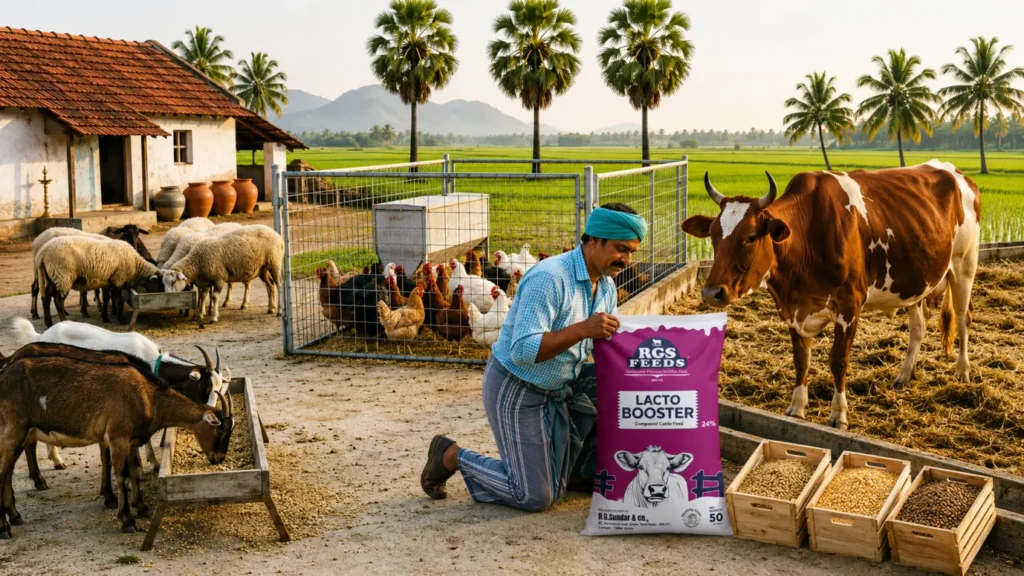
Choosing the best feed involves a lot more than just looking at the protein percentage.
Check Protein Levels
First thing, look at the crude protein number printed on the feed label. In general, animals that produce more need more protein in their diets to help them perform.
Evaluate Feed Quality
Look for:
- Fresh and contamination-free feed
- High digestibility
- Balanced nutrient composition
- Consistent ingredient quality
- Reliable and trusted manufacturer
Match Feed to Livestock Type
Animals of different species require different nutrients. For instance, the protein requirements of a dairy cow will be quite different from those of goats, sheep, or poultry. Because of this, selecting the feed for your livestock following their species-specific nutrient needs will help increase their productivity.
Common Mistakes Farmers Make When Buying High Protein Feed
Farmers may be unintentionally reducing their production capabilities because of common nutritional mistakes they’ve been making.
Choosing a feed based solely on price
Cheaper feeds often use lower quality ingredients, which can lead to lower overall production and profits.
Ignoring feed labels
Understanding the feed labels allows animal producers to provide balanced nutrition to their animals.
Overfeeding Protein
Giving too much protein raises the cost of the feed without any extra gain.
Not Balancing Energy and Protein
Protein is most effective when combined with sufficient energy. Having a balanced diet can cause better growth, nutrition, and feed efficiency of livestock.
Affordable High-Protein Livestock Feed: Cost vs. Performance
Initially, low-cost feed might look attractive. But investing in quality protein feed usually gives better results eventually. It is because higher-quality feed leads to better growth, better milk production, stronger immunity, and better reproductive performance.
It is important that farmers focus on the value of feed rather than the price only. The right feed offers definite benefits through healthier animals and higher productivity.
Why Farmers Trust RGS Feeds
We at RGS Feeds know that great nutrition is the foundation of livestock performance. Supporting your dairy cattle, goats, sheep, and other livestock the right way with protein, energy, vitamins, and minerals, our scientifically created feed products are here for you.
RGS Feeds focuses on:
- Top-quality feed ingredients
- Consistent nutritional quality
- More efficient feed conversion
- Improved production of milk
- Better animal growth and gain
- Trustworthy solutions for livestock nutrition
By providing quality products, we help farmers raise healthier animals and increase their farm profits.
Frequently Asked Questions
1. What is the best high protein feed for livestock?
Top protein feed usually means a mixture of prime ingredients like soybean meal, groundnut cake, and other nutrients that are well balanced for each species of livestock.
2. How much protein does a dairy cow need in a day?
Generally, most dairy cows need feeds that have about 16%-18% protein.
3. What kind of protein feed is the best for goat farming?
Goat feed, which has high protein contents with soybean meal and oilseed cakes, is very effective for goat production.
4. Does protein feed increase milk production?
Yes. Protein feeds aid in milk production as well as in increasing the yield of milk.
5. Is soybean meal superior to cottonseed meal?
Both the feeds provide excellent sources of protein. Soybean is highly digestible, whereas cottonseed meal also serves as an energy source for ruminants.
6. How do I identify quality livestock feed?
It is recommended to inspect ingredient quality, protein content levels, the degree of digestibility, freshness, the manufacturer’s reputation, and nutritional balance.
7. Can high protein feed help with faster weight gain?
Yes. Protein-rich feed helps in building muscles and growing efficiently, mainly in young cattle, goats, and sheep.
8. What role does protein play in livestock nutrition?
To begin with, protein helps the formation of muscle tissue, the repair of tissues, the production of milk, reproduction, and an effective immune system.
Conclusion
Selection of the right high-protein feed for livestock is probably the single most significant decision that can be made by any farmer. Protein feed not only ensures good health of the livestock but also plays an important role in increasing their growth rates and milk productivity, which will ultimately lead to increased profitability.
Improve livestock health and profits with RGS Feeds’ high-protein nutrition solutions.