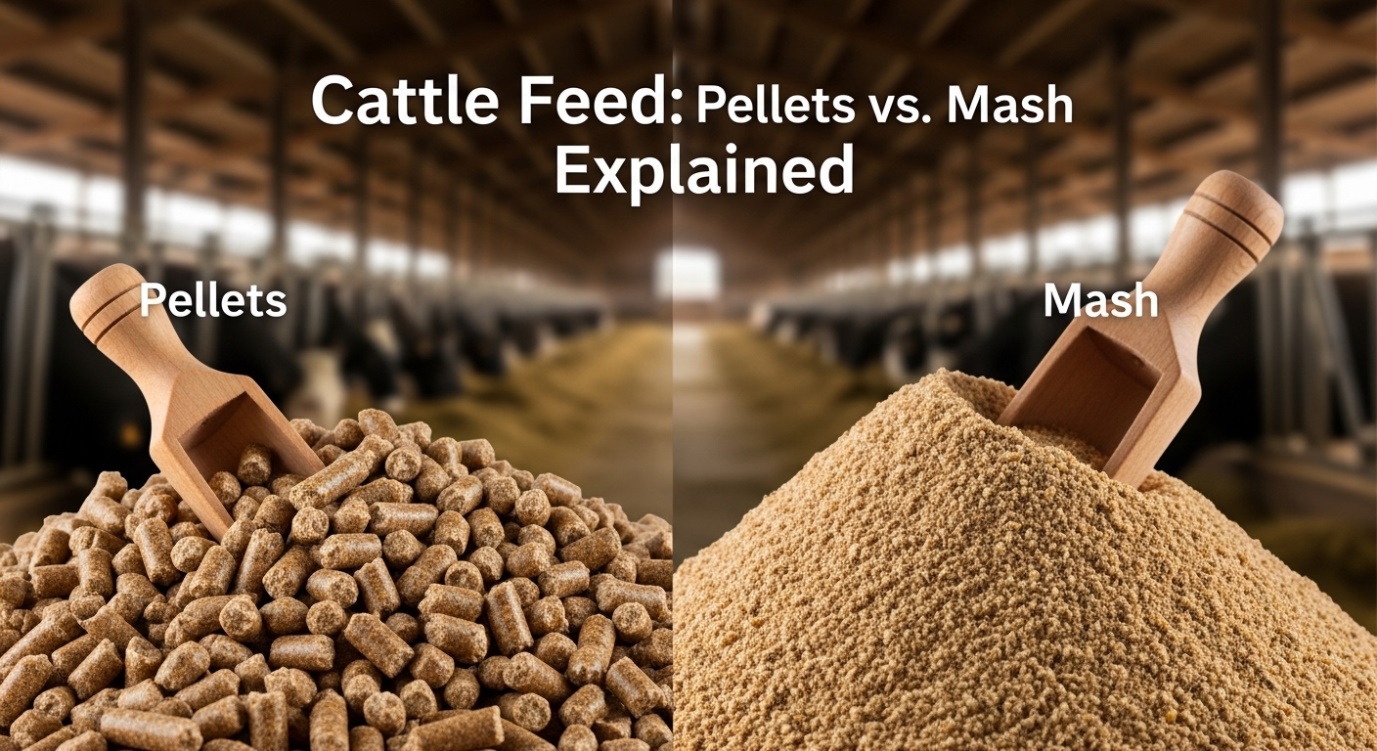
Cattle Feed: Pellets vs. Mash Explained
The type of cattle feed chosen has a great impact on milk production, weight gain, and the general health of the herd. Nowadays, a lot of forward-thinking farmers, to a great extent, depend on a trusted nutrition provider like RGS Feeds in order to get steady and good performances from their animals. A frequently asked question in cattle nutrition is whether cattle pellets or mash cattle feed is a better choice. Both forms of feed have their advantages, but knowing how they operate is a good way of making the right choice for farmers.
What Is Cattle Feed?
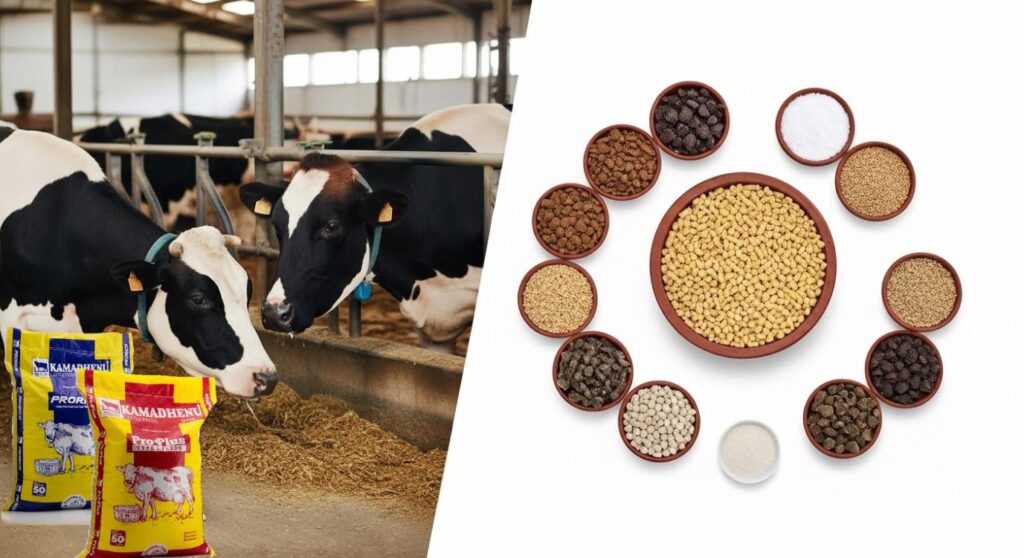
Cattle feed is a deliberately formulated mixture of grains, oil cakes, bran, minerals, and vitamins that is sufficient in nutrients for cows at different stages of need. Premium feeds, for instance, those created by RGS Feeds, are mainly concerned with supplying the right amount of energy, fiber, and protein. Protein pellets for cattle are one of the targeted methods to raise milk production, improve body condition, and foster growth. Although the feed components may be almost the same, the manner in which feed is given, pellets or mash, can have a great impact on the results.
Understanding Mash Cattle Feed
A mash cattle feed is a powdery and soft mixture of feed ingredients. It is widely used in traditional farming systems because it can be made locally and adapted to the availability.
Mash feed has the advantage of being flexible and having low processing costs, which makes it very suitable for small and medium farms. Nonetheless, mash has a few drawbacks. Cows are known to tease eat, thus leaving essential nutrients behind. Moreover, dust and spillage can increase wastage, which results in uneven nutrient intake. Mash can still provide basic nutrition, but it probably will not be able to support high milk production or fast weight gain at the same time.
What Are Cattle Pellets?
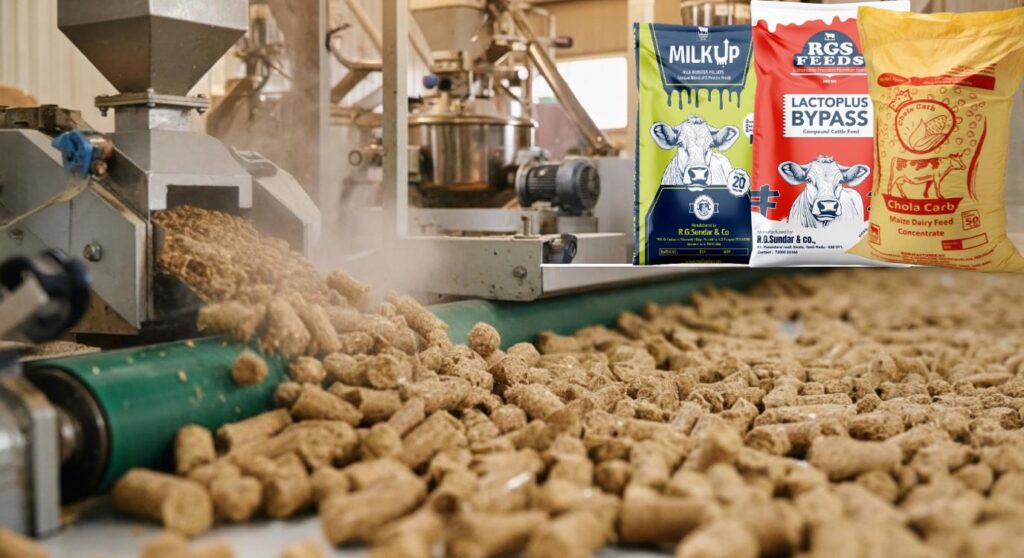
Cattle pellets are made by first grinding the ingredients, then mixing them thoroughly, and finally pressing them into solid pellets using steam. It is a very efficient process so that each pellet contains the same nutrients in the right balance.
Using pellets can improve digestibility, minimize feed wastage, and stop selective feeding. Different types of pellets are available, for instance, calf calm pellets, cow pellets for regular feeding and protein, and protein-rich cattle pellets for dairy cows. Farmers who switched to pellet-based nutrition with RGS Feeds noticed that the milk quality can be more stable, the animals consume more, and they are in better condition.
Pellets vs. Mash: Explained Simply
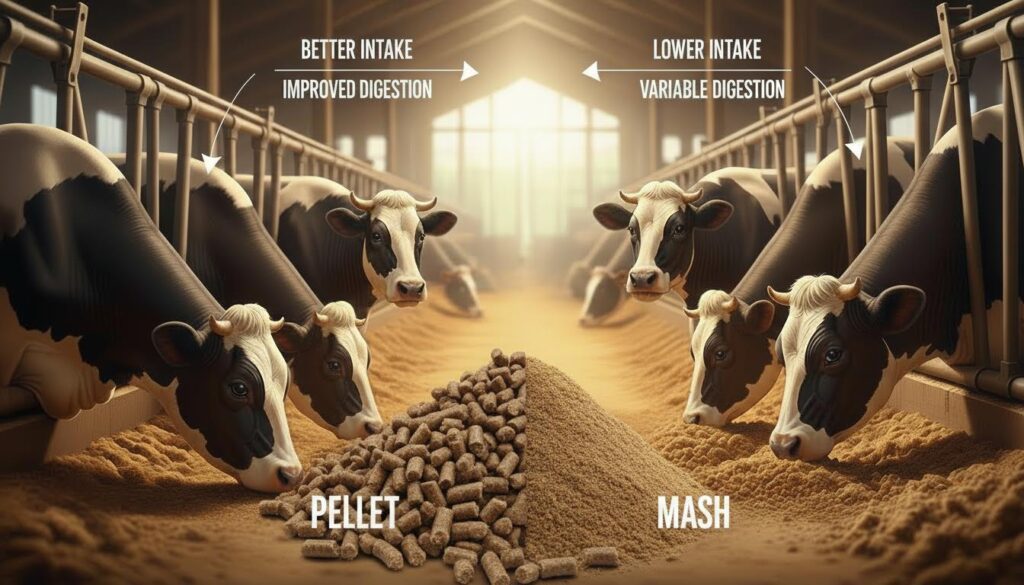
When comparing pellets vs. mash cattle feed, the main difference is nutrient consistency and efficiency. Every pellet contains a balanced mix of protein, energy, and minerals, which
ensures that the cows get a consistent diet every day. Besides, it is understood that better digestion and feed conversion lead to higher milk production and a good body condition. In contrast, a mash feed may result in uneven intake due to the ingredient separation and selective eating.
Pellets are less likely to be wasted, and they generate less dust as well, thus being more economical in the long run even though the initial cost might be slightly higher. If farmers are folding protein pellets for cattle milk production or protein pellets for cattle weight gain, pellets can bring faster and more dependable results than mixing.
Choosing the Right Feed for Your Herd
Choosing the right feed depends on what you want to achieve with your farm:
Dairy cows: Use high-protein dairy cow pellets, as these will increase the milk yield and fat content.
Growing beef cattle: Protein pellets will help these animals to have a healthy weight gain both in terms of quantity and quality.
Calves: Soft calf calm pellets will ease chewing and digestion.
Cost-conscious farms: Mixing mash with premium pellets from RGS Feeds can give good performance while keeping the budget in check.
How to Identify Quality Cow Feed Pellets
Check for an appropriate protein content, a fresh aroma, very few broken pellets, and a well-balanced mineral content. To be safe and assured of quality, go with a trusted brand like RGS Feeds.
Feeding Tips for Better Results
You should change the diet of the animal from mash vs. pellets over a period of 7 days to avoid stress on the digestive system. It is a good practice to have clean water for drinking and green fodder along with the cow feed pellets at all times. Keep track of the milk production and the physical condition of the animals to regulate the feeding levels accordingly.
FAQs
1. Which is better, cattle pellets or mash feed?
Cattle pellets are generally acknowledged to bring about better performance and provide uniform nutrition, while mash feed is considered to be more economical and flexible.
2. Can protein pellets increase milk production?
Cattle protein pellets for milk production have been shown to increase yield and improve milk quality.
3. Are pellets safe for lactating cows?
Pellets are clean, balanced, and easy to digest for lactating cows.
4. What are calf calm pellets used for?
These products help to ensure smooth digestion and stress-free growth of young calves.
5. How do I switch from mash to pellets?
Initially, you should mix mash and pellets and then slowly increase the quantity of pellets over one week.
6. Do cow feed pellets reduce wastage?
Yes, pellets greatly reduce wastage compared to mash feed.
7. Which feed is best for improving cow weight gain: pellets or mash?
For prompt and healthy growth, protein pellets for cattle weight gain are more efficient than mash. Pellets deliver consistent energy and protein intake, thus boosting feed conversion and body condition, especially if they are from reputable brands like RGS Feeds.
8. Can cow feed pellets be used as a daily feed?
Sure, daily feeding cow pellets are formulated as a complete ration. They provide balanced nutrients every day without the risk that the ingredients will get separated, as is seen in mash cattle feed.
9. Are high-protein cattle pellets beneficial to lactating cows?
Definitely. High-protein cattle pellets for dairy cows result in better milk yield, higher fat percentage, and faster post-calving recovery by providing a continuous supply of amino acids and minerals.
Conclusion
Both mash and pellets are good for different purposes, but cattle pellets have a clear advantage over mash cattle feed in terms of consistently producing milk, better digestion, and less feed loss. It is well worth the change in farm profitability to choose the right cow feed pellets that meet the needs of your herd.
Scientifically balanced nutrition from RGS Feeds is a reliable source of milk, growth, and overall cattle performance.

Pingback: minoxidil pk metabolism kinetics
68jili… hmm, pretty cool interface. Jili’s games are fun, got some free spins to start. I’ll be back to try more, hopefully I can get lucky again. Check them out here: 68jili
Just tried 777egame, and I’m digging the vibe. Easy to sign up, good game selection. Got a welcome bonus, which is always a plus. Maybe I’ll win big! Click to try: 777egame
Gave 84bet1 a go today. Navigation is simple, so easy to find what you’re looking for. A pretty good option if you wanna kill some time, hopefully with some good fortune too. Here’s the link: 84bet1
Pingback: PDE5 inhibitor counterfeit risks
Pingback: avanafil contraindication clinical notes
Logging in is a breeze and the account verification was surprisingly quick. I really appreciate the efficiency of lotusdewalogin.
Pingback: Absorption and Distribution Variability
Best slot action I have had in a long time. The graphics are crisp and the win rate feels fair. Big fans of minion178slot over here.
Best online casino experience in the Philippines so far. The customer support is very responsive and helpful with my deposit. Love phcash11casino.