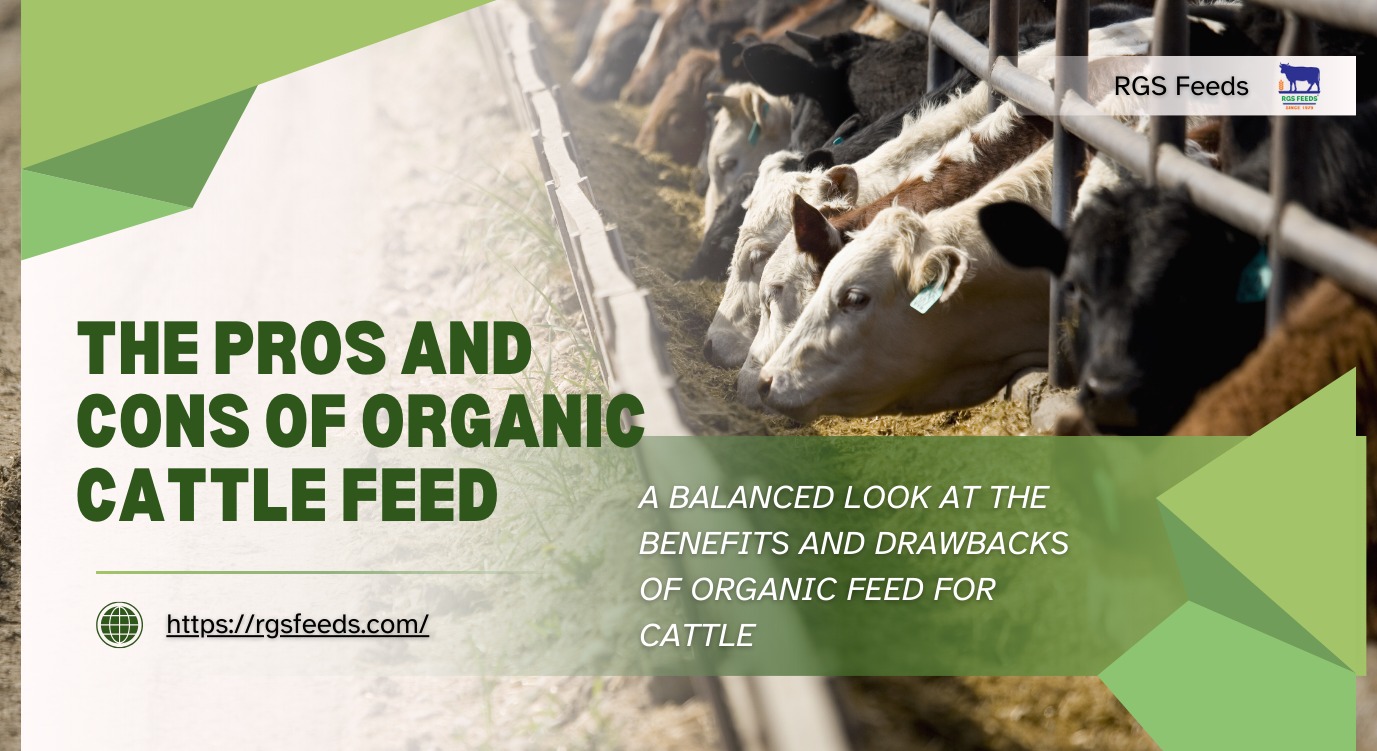
The Pros and Cons of Organic Cattle Feed
The need for organic cattle feed is increasing rapidly as dairy farmers become more inclined to focus on animal health, milk quality, and sustainable farming practices. In India, the worries about chemical residues, antibiotic use, and long-term herd productivity have propelled farmers to compare organic cow feed with conventional cow food. Though organic products are mostly marketed as being better for health and the environment, they still have some drawbacks.
Knowing both advantages and disadvantages of organic cattle feed equips farmers with the right mindset and makes it easier to decide which way to go. RGS Feeds feels that the best feed for cattle should be chosen based on the farm’s practical needs and long-term goals.
What Is Organic Cattle Feed?
Organic cattle feed comprises of components that are grown without the use of synthetic pesticide, chemical fertilizers, genetic modifications (GMOs), or any sort of artificial additives. In contrast with the typical feed for cows, the organic cow food is regulated at every step from production to processing to ensure that the nutrition provided to the dairy cows is healthier.
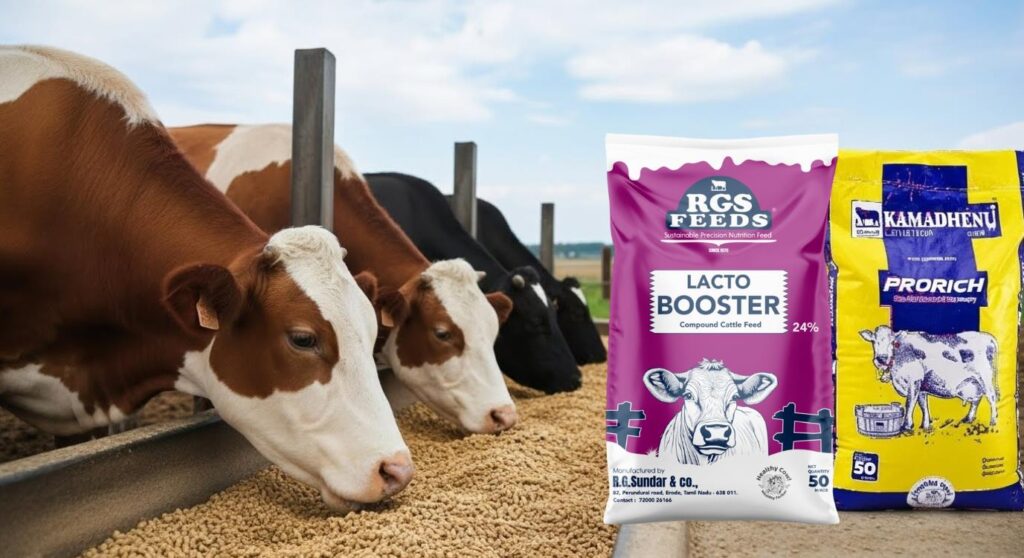
Such a dairy cow feed not only keeps the digestive system of the cows healthy but also strengthens their immune system and lowers the risk of exposure to toxic substances. Farmers engaging in sustainable dairy farming or producing organic milk would most likely include organic cattle feed in their feeding plan.
Common Ingredients Used in Organic Cow Feed
Ingredient transparency is one of the main features of organic cattle feed. In most cases, it is made up of organic grains like maize, barley, and millets that supply the necessary energy. Pure oil cakes such as groundnut cake and mustard cake are most frequently utilized as protein sources. Mineral mixtures come from duly certified natural sources, and forage-based ingredients are there to keep the rumen healthy. Such a balanced composition makes organic dairy cow feed a good choice for cows with a fragile digestive system and long lactation periods.
Pros of Organic Cattle Feed
One of the most significant reasons for using organic cattle feed is a rise in animal health. Being free of any harsh chemicals or synthetic additives, cows generally become better in digestion, have a stronger resistance to diseases and get less digestive disorders. The case of high-yielding dairy cows benefits the most from such a situation.
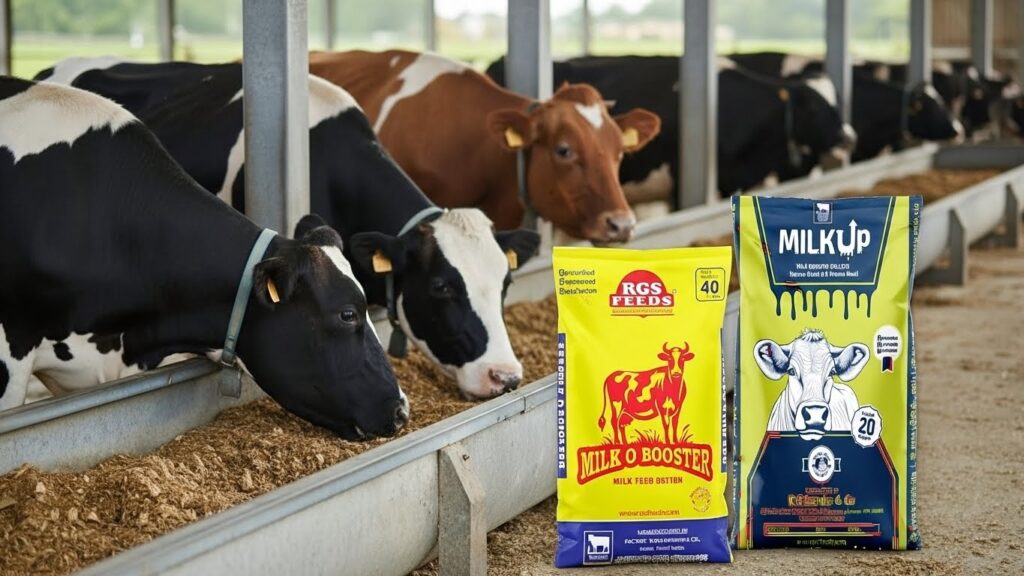
Organic cow feed also makes milk quality better. Milk from cows fed with organic cow food usually has a better taste, more stable quality, and fewer chemical residues. This is perfect for farmers providing premium or organic dairy markets.
What is more, the farm becomes sustainable in the long run. Organic cattle feed lessens the farm’s dependency on chemicals and encourages the use of environmentally friendly farming practices. After some time this helps keep the soil fertile and creates a stable farm ecosystem.
Furthermore, feeding organic dairy cows is a must if you want to go for organic certification. Farmers intending to sell certified organic milk have to use approved organic cattle feed to comply with the regulations and meet the expectations of consumers.
Cons of Organic Cattle Feed
Even an organic cattle feed is not free of disadvantages. A higher price is, by far, the most talked-about issue. The production of organic raw materials is more money-consuming, and to source them is as well, and the certification and the transportation costs add up to the final prices if compared to those of the conventional ones.
Besides that, availability can be a problem that is bulk cattle feed is needed. For some areas, there may be a limited supply of bulk cattle feed that is consistent, and thus, planning and procurement of large dairy farms become more difficult.
The third limitation is that the results that can be seen are slower. An organic diet for cows leads to better health and higher quality of milk in the long run, and thus, in the short run, the increase of milk yield may not be noticeable. Farmers are required to have patience and maintain a steady routine to reap the benefits.
Storage is yet another factor. The shelf life of organic cattle feed is shorter than that of non-organic ones as it is devoid of chemical preservatives. In order to keep the feed quality and prevent the occurrence of spoilage, it is necessary to have the right storage conditions.
Organic vs Conventional Cattle Feed
Typically, conventional cattle feed is less expensive and can be easily purchased in large quantities in the form of bulk cattle feed. On the other hand, it may have additives that could have an adverse effect on the health of the animals in the long run.
On the contrary, organic cattle feed provides healthier nutrition, higher quality milk, and a healthy planet for future generations, although it is more expensive. A farmer who is serious in maintaining the sustainability of his dairy farming will see organic cow feed not as a solution for a short period of time but rather as a long-term investment.
Who Can Benefit the Most From Organic Cattle Feed?
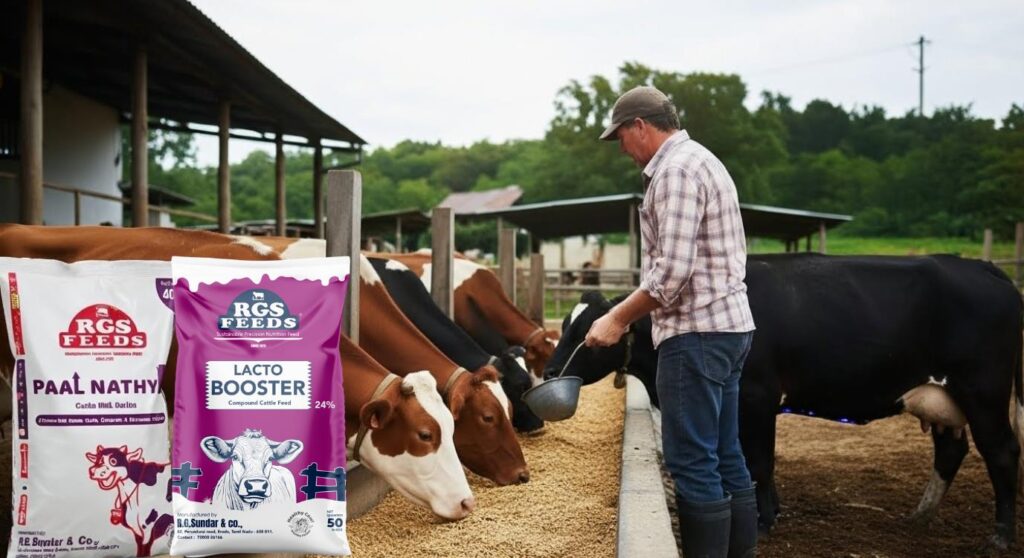
By far, the best users of organic cattle feed are small or medium-sized dairy farmers, producers of organic milk, and farms orienting towards premium dairy markets. Those farmers who put first animal welfare, the purity of milk, and environmentally friendly practices would probably be the ones to gain the most from organic dairy cow feed.
Conclusion
Feeding cows with organic feed makes sense from the perspective of the animal’s health, the quality of milk, and the environment, however, this type of feeding is more expensive and sourcing is difficult. Which one to choose depends on the size of your farm, how much money you have, and what your long-term goals are with the dairy. If organic feed is given to the cows in the right way, it is not a shortcut but rather a strategic investment in the health and productivity of the herd.
At RGS Feeds, we are ready to offer you expert advice and dependable solutions for your cattle feed needs. These include the best quality cow feed and bulk cattle feed options. Get in touch with RGS Feeds if you want to pick out the best cattle feed for your dairy and thus raise your performance with a great level of trust in yourself.
FAQs
1. Is organic cattle feed healthier than regular cow feed?
Absolutely, organic cattle feed promotes sustainable animal health and purer milk but it has a higher price compared to regular cow feed.
2. Can organic cow food lead to higher milk production?
Organic cow food may not increase quantity immediately, but it significantly enhances milk quality with time.
3. Is organic dairy cow feed sold as bulk cattle feed?
Organic dairy cow feed in bulk cattle feed is a local matter and depends on the supplier’s capacity.
4. Is organic cattle feed good for any type of cows?
Certainly, organic cattle feed is highly beneficial for dairy cows with sensitive digestion or those having health problems.
Quick access and no downtime. I appreciate the simplicity of the login process and the overall speed of the platform. kk77login is a winner.
The slot variety here is insane. I love the graphics and the overall vibe of the platform. My go to spot is definitely ayu89slot.
Such a vibe! The games load instantly and I love the variety of options available. braa888 is hands down one of the best platforms I have used recently.
I’ve tried a few platforms lately, but the gameplay here is surprisingly smooth. The bonuses are actually fair and easy to claim. Highly recommend checking out mumu86slot for a great session.
Finding my favorite tables here is a breeze thanks to the smart filters. The live dealers bring great energy and the game variety keeps things fresh week after week. Bonus terms are crystal clear and the reload offers reset often. A top destination for both casual and serious players alike
39jlcom is a solid option for online gaming. Worth checking out for sure! See what they offer here: 39jlcom